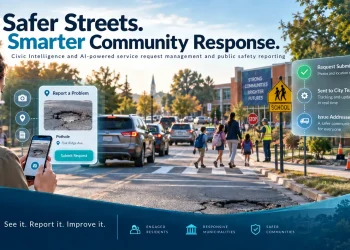
Organizations worldwide are entering a new phase of digital transformation as Agentic AI moves beyond basic conversational tools and becomes part of day-to-day business operations. By combining intelligent AI agents with scalable AWS cloud services, organizations can automate complex workflows, connect disconnected systems, process large volumes of information, and improve the speed and consistency of service delivery.
Traditional automation generally follows predefined rules and requires separate programming for each process. Agentic AI introduces a more flexible model. AI agents can interpret requests, retrieve relevant information, evaluate available options, coordinate multiple tasks, and complete authorized actions across applications. When designed responsibly, these agents operate within defined permissions and transfer sensitive or high-impact decisions to human reviewers.
Agentic AI can support a wide range of government and commercial operations. Common use cases include intelligent document processing, customer service, case management, mortgage underwriting, claims processing, compliance reviews, public-safety reporting, service-request management, data validation, and operational reporting. Agents can read submitted information, identify missing data, route work to the correct team, generate recommendations, update systems, and notify authorized users.
AWS provides the cloud foundation needed to deploy these capabilities securely and at scale. Services such as Amazon ECS and AWS Lambda can run applications and automated processes, while Amazon API Gateway supports controlled connections between AI agents and existing systems. Amazon RDS and Amazon S3 provide structured and unstructured data storage, and Amazon SQS and EventBridge support reliable communication between applications, services, and background workflows.
Security remains an essential part of every Agentic AI implementation. AWS Identity and Access Management can restrict agents and users to approved resources, while AWS WAF helps protect public applications and APIs from common threats. Encryption, network controls, audit logs, continuous monitoring, backup, and disaster recovery can be incorporated throughout the environment to protect sensitive information and support regulatory obligations.
Operational visibility is equally important. Amazon CloudWatch and centralized logging can help organizations monitor system performance, agent activity, application errors, security events, and processing times. Every important action can be recorded with a timestamp, user or agent identity, data source, decision result, and approval status. This provides the traceability required to investigate issues, measure quality, and demonstrate accountability.
Integration readiness allows Agentic AI to deliver value without forcing organizations to replace every existing platform. Secure REST APIs, event-based messaging, data pipelines, and configurable connectors can link AI-enabled workflows with case-management systems, customer platforms, financial applications, document repositories, GIS environments, healthcare systems, and public-sector technologies. This approach enables organizations to modernize gradually while protecting previous technology investments.
Human oversight remains central to responsible adoption. An AI-generated recommendation should not automatically become a final decision when legal, financial, healthcare, public-safety, or personal interests are involved. Approval workflows, confidence thresholds, exception queues, access controls, and clear escalation procedures help keep authorized personnel involved wherever judgment or accountability is required.
The combination of Agentic AI and AWS creates an opportunity to transform fragmented processes into connected, measurable, and auditable digital operations. Organizations can reduce repetitive work, improve response times, strengthen data quality, and provide employees with better information for decision-making. Customers benefit from faster service, clearer communication, and more consistent outcomes.
As adoption continues, successful organizations will focus on more than deploying AI technology. They will establish governance, security, integration standards, performance measures, and human-review controls from the beginning. Agentic AI supported by a secure AWS architecture can then become a dependable operational capability—one that helps organizations innovate while maintaining privacy, transparency, resilience, and trust.